Introduction
 ST MATH IMMERSION: EMBEDDED PL
Developing a Strong Mathematical Schema
Schema is our brain's way of organizing our thoughts and experiences. It's the way we make sense of the world around us. As students engage in academic discourse in this course, they're revising, extending and building new schema around mathematics concepts. View this video to learn more about schema.
Academic Discourse: Effective Facilitation Strategies
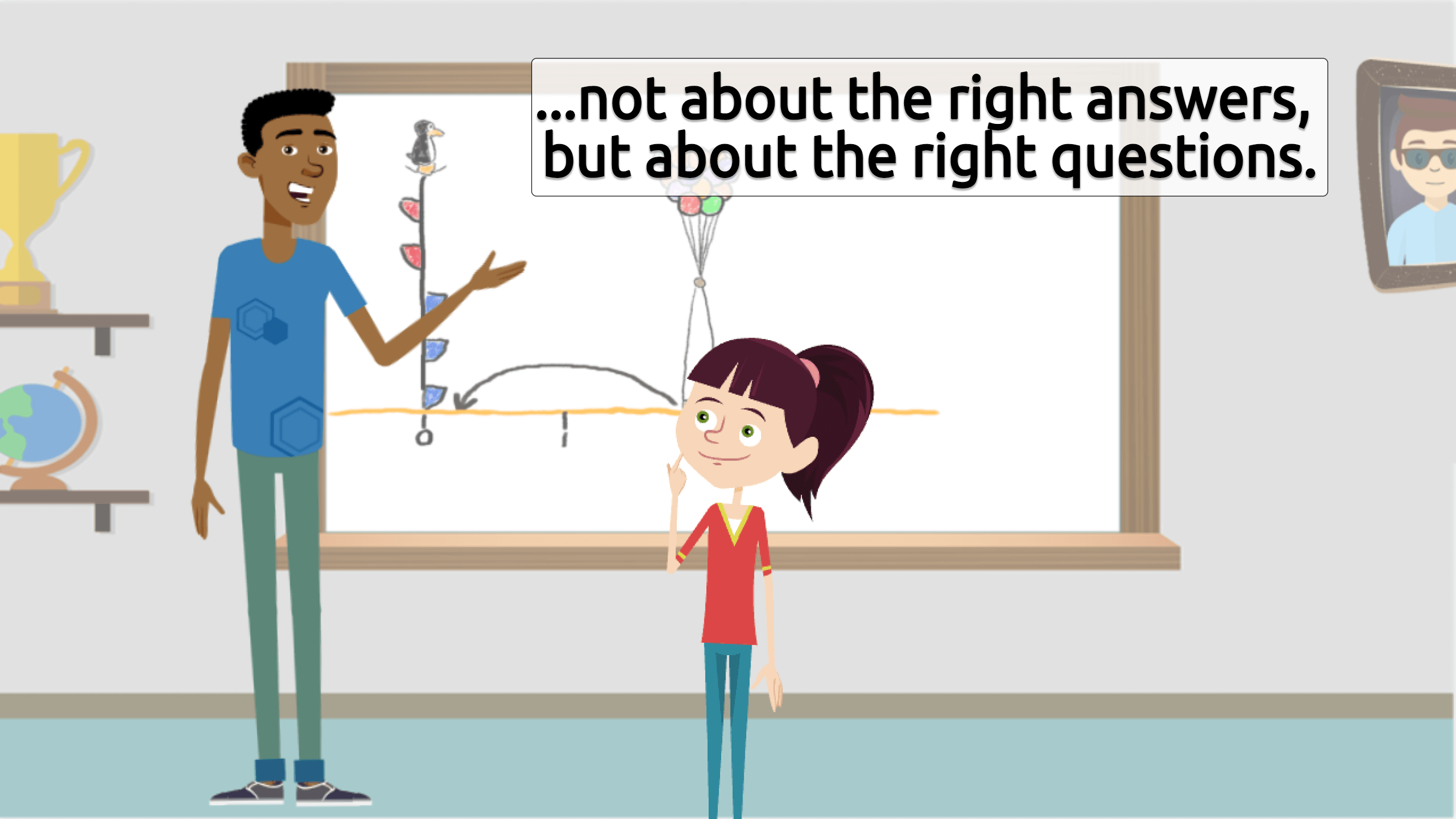
Facilitation plays a pivotal role in creating a classroom rich with academic discourse. Asking facilitation questions that focus on student thinking helps engage them in deeper learning around the concepts. Click through the slideshow for a few quick strategies.
Facilitating in Action: Puzzle Talks
For facilitation to be effective we must purposefully plan the types of questions we are going to ask ahead of time. The types of questions you ask should make students accountable for their thinking. The questions should address thinking that results in correct solution strategies and thinking that results in incorrect thinking strategies. Students should be engaged in processing, communicating, evaluating, considering the thoughts of others, and refining their own thinking.
Academic Discourse: Effective Facilitation Strategies
Engaging students in discussions around the problem solving activities is a great way to explore connections, expand perspectives, and have students check and challenge each other. Have students share strategies, compare, and share their work. Click through the slide deck then watch the video to learn more about sharing student work.

Facilitating in Action: Thinking and Reflecting Time

Students use their My Thinking Path, exit tickets, student notebooks (including problems of the day, math journal prompt) to review all that they have learned. Engage them in a discussion around what they have learned.
- Unpacking their thinking - how are they thinking about the math they learned this week?
- Examining their mistakes - what were their aha’s this week? How did they learn from their mistakes?
- Applying their hypothesis - how might they apply this learning to similar problems? What can they connect it to?
-
Click the image to see the slide deck to get more information about My Thinking Path and Exit Tickets.
Final Week of ST Math Immersion
Reflection Poster
- This poster is completed in the final week of ST Math Immersion. It is a culmination of the thinking, learning, and growth that students experienced during this course.
Extending the Learning
- This is an opportunity to revisit a problem of the day that has been previously discussed, extend student thinking and ask additional questions to deepen understanding.
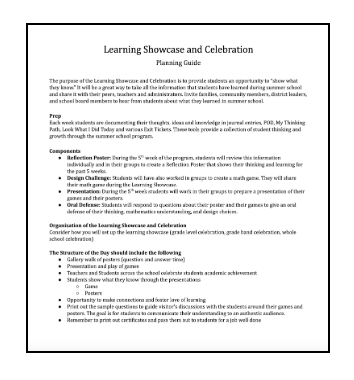
Learning Showcase and Celebration
- This is a time for students to share what they have learned in ST Math Immersion. They will create a poster, complete their game and be prepared to give an oral defense of their work.
*Parents, community members, school administrators, teachers, and board members should be invited to this showcase and celebration.